
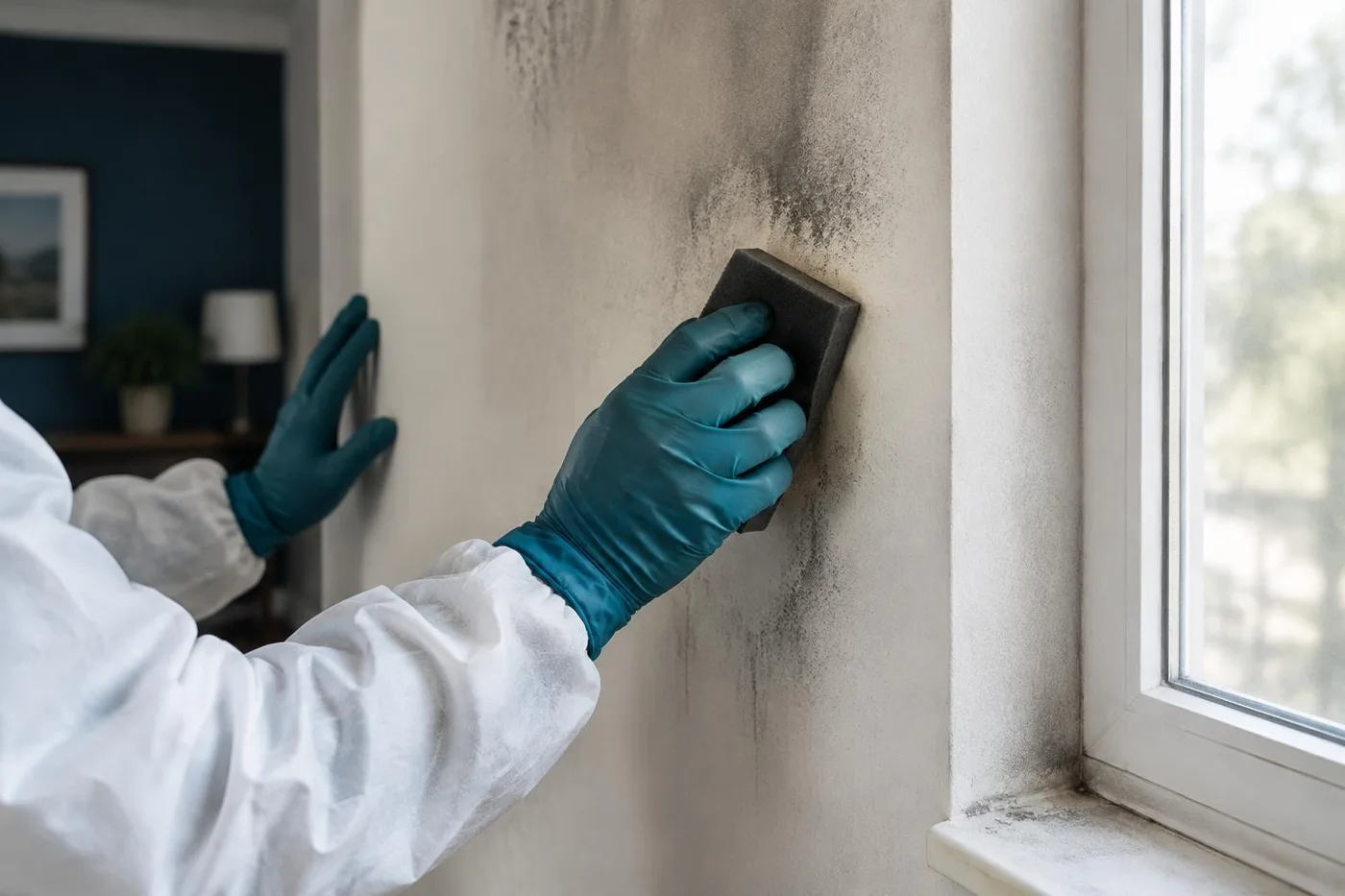
01 / SOOT REMOVAL
Understand the deposit before disturbing it
A dry, powdery residue can behave differently from an oily deposit produced by some burned materials. The appearance alone is not a laboratory identification, so we consider the reported incident, visible condition, and the finish together. Suspected asbestos or chemical contamination requires qualified specialists rather than routine soot cleaning.
Do not sweep deposits through the building, shake affected textiles in clean spaces, or begin improvised scrubbing. These actions can redistribute contamination and complicate recovery. No one should enter a restricted or unsafe property to check soot levels, collect samples, or take photographs for an enquiry.
02 / SOOT REMOVAL
Use dry-first removal where appropriate
Where the substrate and deposit allow, suitable dry removal is considered before wet cleaning. The purpose is to lift loose material while reducing smearing and unnecessary moisture contact. Dry-first is not a universal instruction for every surface; fragile finishes, embedded deposits, and unusual materials need their own assessment.
After loose residue has been addressed, controlled cleaning may be proposed for the remaining smoke film. A small trial area helps reveal color transfer, finish sensitivity, and likely limitations. Aggressive abrasion is not a default solution, and a method suitable for tile should not automatically be used on painted plaster or decorative timber.
03 / SOOT REMOVAL
Different finishes need different expectations
Intact glass, sealed tile, and selected nonporous surfaces may offer a clearer cleaning boundary than porous plaster, unsealed stone, or textured coatings. Grout lines, decorative profiles, and unfinished edges can retain deposits even when the surrounding flat surface responds well. Access and existing condition influence what can reasonably be attempted.
Soot staining can remain after removable particles have been lifted. Heat changes, damaged paint, and absorbed discoloration are not necessarily evidence of incomplete cleaning. Where a finish needs replacement or repainting, we identify that limitation rather than repeatedly treating it. Repainting and building repairs are separate from the agreed cleaning work.
04 / SOOT REMOVAL
Protect contents and adjacent clean areas
Movement through the property can carry soot on shoes, packaging, and belongings. Agree which rooms remain unaffected, how affected items will be handled, and where retained contents can wait without creating a new cleaning problem. These practical arrangements matter in both occupied buildings and properties awaiting wider repair work.
Recoverable contents are selected with the owner, not assumed recoverable as a group. Porous upholstery, paper, damaged plastics, and heat-affected objects may need replacement or advice from an appropriate specialist. Exterior cleaning does not establish that an electrical device, kitchen appliance, or safety item is suitable for use.
05 / SOOT REMOVAL
Define the scope and review the result
An agreed soot-removal scope should name accessible areas, retained surfaces, and selected contents. It should also identify exclusions such as inaccessible voids, AC ducts, hazardous materials, laboratory testing, engineering, insurance loss assessment, and fire certification unless separately quoted and confirmed. Structural repairs, reconstruction, repainting, electrical, and plumbing work are not standard cleaning inclusions.
A cleaning assessment cannot establish structural or electrical safety or occupation fitness. Once authorized safe access is confirmed, Cleanology can discuss enquiries across Doha, West Bay, The Pearl, Lusail, Al Rayyan, Al Wakrah, Al Wakair, and Al Khor, with other locations subject to confirmation. Odor concerns may require a separate source-focused review beyond visible soot.