01 / INDUSTRIAL FIRE CLEANING
Provide the site context before arranging access
Tell us the facility type, the area affected, the materials involved if known, and who controls access. Explain whether the enquiry concerns an office within an industrial site, an ordinary storage area, or a process zone. These are different environments and cannot be assessed as interchangeable cleaning tasks.
Share existing restrictions and relevant site information through authorized channels. Do not enter a restricted zone to obtain photographs, collect residue, or identify containers. Cleaning assessment does not establish structural or electrical safety, occupation fitness, or fire compliance, and it cannot replace the site's own qualified safety decisions.
02 / INDUSTRIAL FIRE CLEANING
Verify capability rather than assuming specialist coverage
We first need to establish whether the requested work sits within capabilities that can actually be confirmed. Machinery decontamination, process equipment, confined spaces, unusual access systems, combustible dust, chemical residues, and specialist industrial systems must not be inferred as included. Where the task requires another specialist, that boundary should be stated before any work is proposed.
Site requirements may determine whether a cleaning assessment is appropriate at all. Authorization, suitable access, required controls, and a clearly defined work area must be established by the responsible parties. If those conditions or the necessary capability cannot be confirmed, the work should not proceed under a general cleaning quotation.
03 / INDUSTRIAL FIRE CLEANING
Separate ordinary residues from hazardous contamination
Visible black deposits do not establish what a residue contains. The materials burned and the site's previous use can change the risk significantly. Suspected asbestos, chemicals, or unknown process contamination require qualified specialists and appropriate decisions before routine cleaning is considered. We do not identify hazardous substances through appearance or smell.
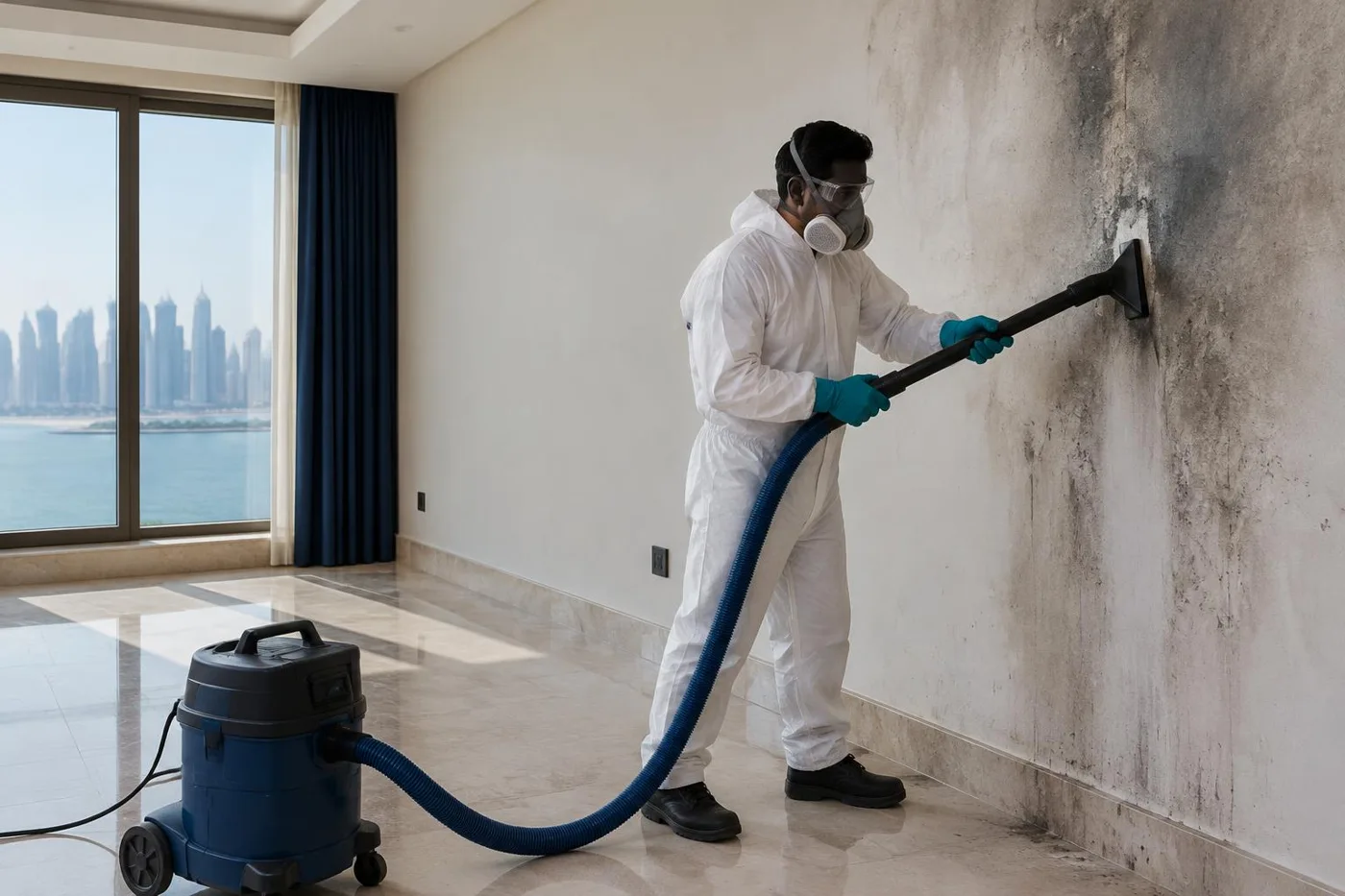
For a confirmed, suitable nonhazardous cleaning scope, methods remain substrate-dependent. Appropriate dry removal may precede wet cleaning where suitable, with trial areas for retained finishes. This is not a technical specification for industrial decontamination. Laboratory testing, hazardous-material handling, and verification against exposure or contamination limits are not standard inclusions.
04 / INDUSTRIAL FIRE CLEANING
Protect equipment and stock through explicit exclusions
Agree exactly which accessible building surfaces or selected contents are proposed for cleaning. Exterior cleaning around machinery must not be represented as servicing, safe-operation approval, internal cleaning, or recommissioning. Process lines, electrical assemblies, instruments, stored products, and protective equipment require the appropriate authorized technical decisions.
Porous or heat-damaged materials may need replacement, and retained stock cannot be declared usable through surrounding surface cleaning. Odor work, where appropriate and confirmed, begins with source removal and residue cleaning rather than fogging alone. No permanent odor outcome is guaranteed, particularly where sources remain inaccessible or outside the accepted scope.
05 / INDUSTRIAL FIRE CLEANING
Confirm the boundary before any quotation is accepted
A proposed quotation must identify accepted tasks, confirmed access conditions, client responsibilities, and specialist exclusions. Structural repairs, reconstruction, repainting, electrical and plumbing work, engineering, hazardous materials, AC ducts, laboratory tests, insurance loss assessment, and fire certification are excluded unless separately quoted and confirmed. Unstable structures require qualified specialists, not a cleaning-led assessment.
Completion applies only to the agreed cleaning tasks and does not approve production restart, equipment use, or occupation. Enquiries from industrial locations across Qatar remain conditional on location, access, scope, and capability confirmation. Contact +974 709 709 29 or info@cleanology.qa with a concise authorized site brief before making operational plans around our involvement.