
01 / APARTMENT FIRE CLEANING
Confirm who can authorize access and work
Before an assessment, establish whether the owner, tenant, property manager, or another authorized representative must approve entry and the cleaning scope. Building management may have separate requirements for contractor registration, service lifts, loading areas, and movement through common spaces. Share those arrangements early so a visit is not planned around unavailable access.
Safe, authorized access is a prerequisite. A cleaning assessment does not release a restricted apartment, confirm electrical or structural safety, certify fire compliance, or determine occupation fitness. If authorities or management have restricted the unit or part of the building, those restrictions must be resolved by the responsible parties.
02 / APARTMENT FIRE CLEANING
Separate apartment and common-area responsibilities
Residue inside a unit and deposits in a shared corridor may fall under different authorizations. We do not assume that permission to clean an apartment includes a lift lobby, neighboring unit, or communal ventilation system. Each area needs its own confirmed access and scope where applicable.
A sensible movement plan considers how selected contents, supplies, and any authorized removal will pass through the building without unnecessarily spreading residue. Explain lift dimensions, parking constraints, and any management handling requirements. Waste routes and disposal arrangements should be agreed rather than assuming bags or damaged items can be left in communal spaces.
03 / APARTMENT FIRE CLEANING
Assess compact rooms and connected storage
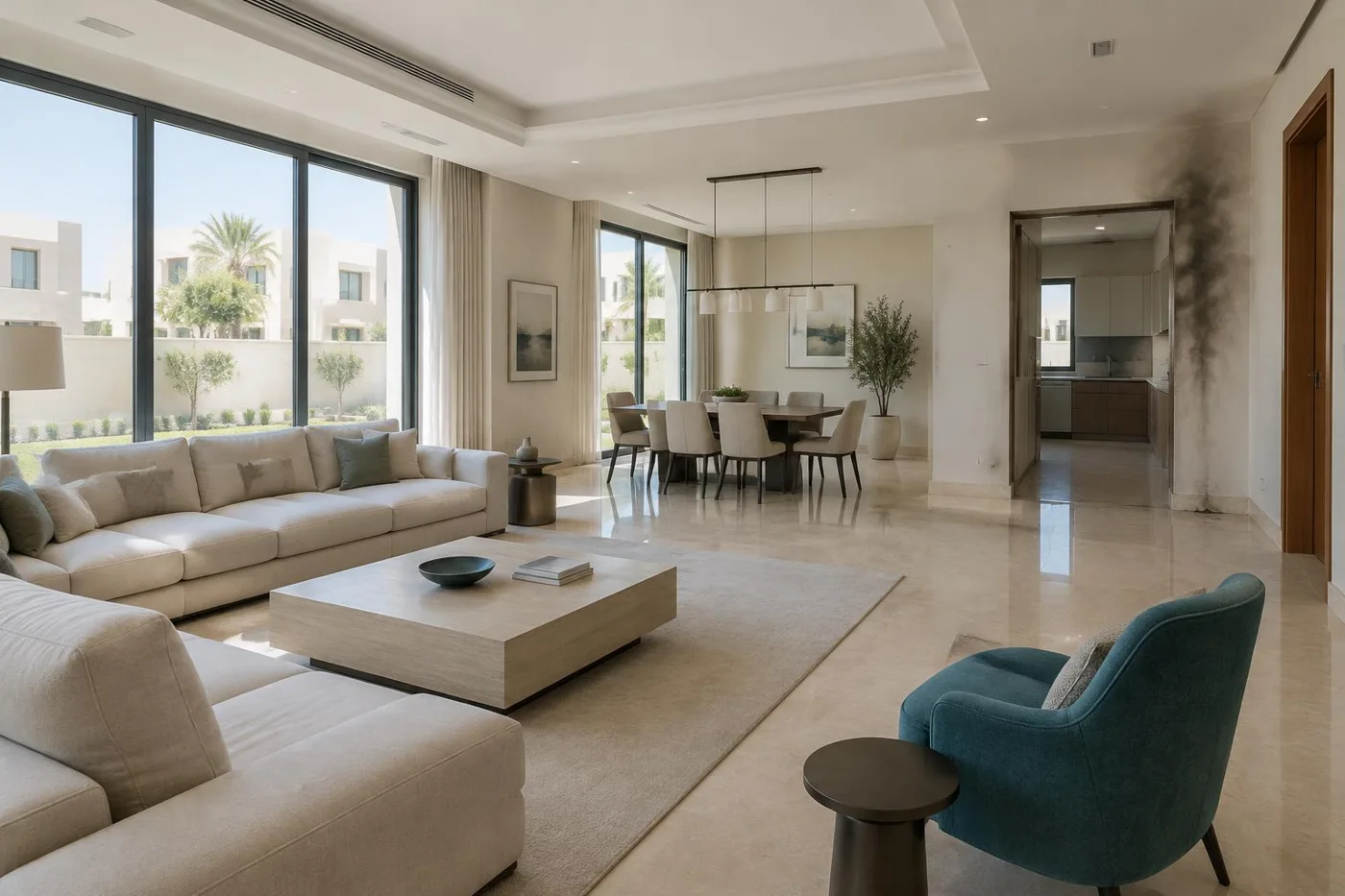
Smoke films may settle on wardrobe exteriors, kitchen fronts, doors, and accessible storage surfaces. Open-plan layouts can connect cooking, living, and dining areas, while closed rooms may show a different condition. The scope should follow accessible findings instead of assuming that every surface in a compact apartment needs the same treatment.
Where appropriate to the substrate, dry removal of loose soot precedes controlled cleaning of remaining smoke residues. Small trials help protect paint, laminates, decorative panels, and other sensitive finishes. Cabinet interiors, enclosed storage, high features, and inaccessible voids are included only if assessed and agreed, not automatically because the room is listed.
04 / APARTMENT FIRE CLEANING
Handle belongings without crowding clean spaces
Limited space can make it tempting to move affected contents into bedrooms or corridors before their condition is reviewed. Discuss a holding arrangement first. Selected intact hard items may be recoverable, but porous upholstery, mattresses, and heat-affected belongings may need replacement or advice from an appropriate specialist.
For kitchen incidents, cleaning accessible appliance exteriors does not establish that an appliance is safe to operate or that food is suitable for consumption. Odor work begins with source removal and residue cleaning rather than fogging alone. Retained porous materials or inaccessible sources can limit the result, and permanent odor elimination is not guaranteed.
05 / APARTMENT FIRE CLEANING
Request a quotation with the building details
Share the location, floor, affected rooms, contents status, access permissions, and building contact arrangements. We consider enquiries in Doha, West Bay, The Pearl, Lusail, Al Rayyan, Al Wakrah, Al Wakair, and Al Khor, with other locations subject to confirmation. A cleaning quotation should specify private and common areas separately where relevant.
Structural repairs, reconstruction, repainting, electrical and plumbing work, engineering, hazardous materials, AC duct work, laboratory tests, insurance loss assessment, and fire certification are excluded unless separately quoted and confirmed. Suspected asbestos, chemicals, or unstable structure require qualified specialists. We do not resolve tenancy liability or decide which party must pay for damage.