
01 / FIRE DAMAGE CLEANING
Distinguish deposits from physical damage
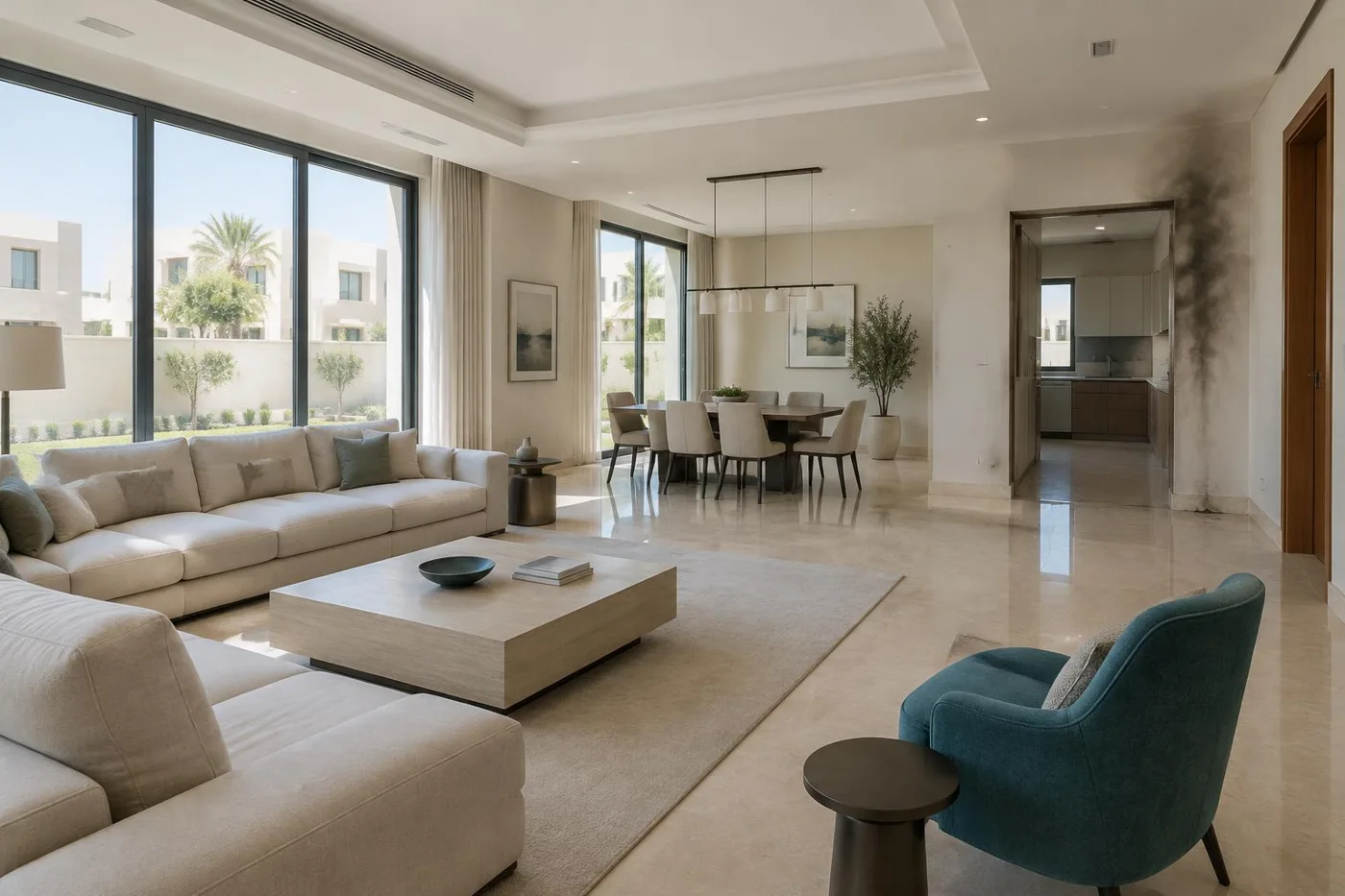
Blackening does not always describe the same condition. A loose deposit may lift from an intact surface, while blistered paint, cracked glazing, charred timber, or warped cabinetry indicates damage that cleaning cannot reverse. A trial clean can inform a cleaning decision, but it cannot establish the strength or safety of the underlying assembly.
We explain where a cleaning outcome is uncertain rather than treating every mark as removable. Assessment requires safe, authorized access and does not establish structural safety, electrical safety, fire compliance, or occupation fitness. Refer damaged structures and building systems to appropriately qualified professionals before cleaning is considered.
02 / FIRE DAMAGE CLEANING
Sequence cleaning around repair decisions
Cleaning too early can mean paying to clean finishes that will later be removed. Cleaning too late can allow trades to spread residues into otherwise unaffected areas. Discuss planned strip-out, replacement, and repair decisions first so the cleaning scope matches the retained parts of the property.
A practical sequence may separate initial accessible residue removal from later detailed cleaning after other contractors finish. Each stage needs its own boundaries and access conditions. Demolition, reconstruction, structural repairs, repainting, electrical work, plumbing, and engineering are not included unless separately quoted and confirmed; a cleaning quotation should not imply those trades are covered.
03 / FIRE DAMAGE CLEANING
Treat retained surfaces according to their condition
For retained finishes, the method depends on both the deposit and the material beneath it. Suitable dry removal may be used before wet cleaning to reduce loose particles without spreading them. Controlled cleaning of smoke residues follows where the finish tolerates it, with attention to edges, handles, ledges, and other accessible collection points.
Water-sensitive laminates, unsealed stone, decorative finishes, and damaged coatings need particular caution. Heat exposure may weaken a finish that previously tolerated normal cleaning. We may recommend leaving an area untreated pending another professional's advice rather than attempting an aggressive method that could worsen visible damage.
04 / FIRE DAMAGE CLEANING
Make contents decisions before moving belongings
Selected intact, accessible contents may be considered for cleaning, but recovery is not automatic. Porous items and objects altered by heat can retain contamination or lose their intended function. We do not confirm the safe operation of electrical goods, assess food safety, or certify protective equipment through exterior cleaning.
Keep an owner-approved list of items for consideration, items awaiting advice, and items designated for disposal. Photographs taken from already safe areas can help explain the situation. Insurance valuation, loss adjustment, laboratory testing, and hazardous-material work remain outside the scope unless separately quoted and confirmed with the relevant capability established.
05 / FIRE DAMAGE CLEANING
Set a realistic completion boundary
A useful handover records the cleaning work completed and identifies residual staining, inaccessible spaces, or retained materials that may continue to hold odor. Odor management starts with source removal and residue cleaning, not fogging alone. Permanent odor elimination is not guaranteed, particularly where affected materials remain concealed or cannot be cleaned.
AC duct cleaning and fire certification are not standard inclusions. Suspected asbestos, chemical contamination, or unstable structure requires referral to qualified specialists. For Doha and surrounding service areas, share access authorization, known damage, and planned repairs so Cleanology can advise whether a cleaning assessment is appropriate.